
September 4th, 2010
On a walk around the cemetary in Gettysburg, it was striking the number of World War II casualties from 1944 and 1945.
World War II was effectively “won” when the allies invade France – D-Day – in June of 1944. Yet the overwhelming majority of Allied ground casualties in the European theater occurred after that date.
For Lincoln, a full year after the tide had really turned at Gettysburg, he wrote of the election of 1864 that the “bottom was out of the tub” and that he had precious little time to save the Union before he was run out of office in the fall elections.
Spiritual growth is much same way. As one individual noted, we get asked the same question twice. The question, “Do you really want this?” That question comes as the excitement of the beginning ends. It comes again right before victory, right before real change.
There is a way in which when we really engage – really take on the enemy in enemy territory – that we have “won.” That does not mean though that life will be without challenges – many of which appear death defying. It does mean a part of us has “died” or surrendered that will actually allowed for real growth to take place.
Tags: Challenges, Spiritual Growth
Posted in Thoughts | No Comments »
September 2nd, 2010
Many people want to “see” God, experience God. But the “seeing”, the experience, eludes them. How then do we see God when our best efforts seem to leave us “without”, searching within what appears to b a vacuum?
To start, God simply “is.” That means that God is something we awaken to vs. journey to. We can often fall into the belief that certain actions will inevitably lead us to the experience of God. I have not found that to be true. My understanding is that we do those “actions’ – be they prayer, reading, meditation, service, worship – so that we are awake when God shows up. They do not create the experience. They do however ensure that we are awake enough to know when the experience arrives.
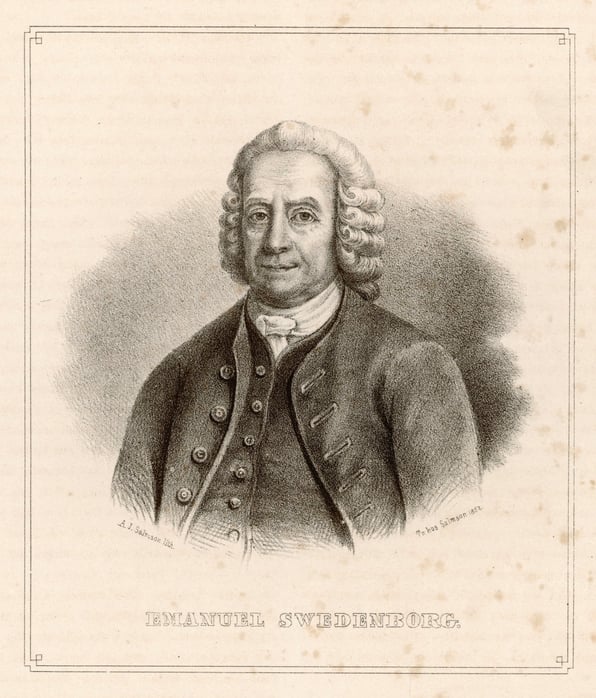
Secondly, God’s presence is most often not of the “clouds parting” “trumpet blaring” variety. The experiences tend to be far more gentle. One author compared God’s voice to being as quiet as the beating of our own heart (Try listening to your heart beating to get an idea of what that means). While some individuals do experience the granduer of God in dramatic fashion – i.e. Martin Luther, Emanuel Swedenborg, Bill Wilson – most of us experience God in more muted yet not any less powerful ways. That is why perhaps Jesus spoke of the presence of the Divine as the spirit, a word that can be translated “wind.”
One author’s point is one I have been thinking a great deal about recently. Her perspective grew out of a endless prayers for the experience of Divine. What she came to realize was that God’s answer to her longing was her longing. It was that love, that compassion, that “pull” in her heart that bore great fruit in her life, a “pull” that might have moved her more in her life than any dramatic presentation of God.
If the pull to experience God is moving you forward in your life, that might just be the whole point. That might just be the mercy and compassion of God at work in your life. Stay awake. Keep doing the work. God will show Himself in the ways He knows to be most important in light of goals that are eternal, not temporal. Those are not often the most dramatic but they are the most transformative.
Tags: Bill Wilson, Emanuel Swedenborg, Martin Luther, meditation, prayer, reading, Service, worship
Posted in Thoughts | No Comments »
September 1st, 2010
Christianity is not a worthiness test. It is incredibly easy – and at times even well intentioned – to allow religion to become “membership” religion. Christianity is not membership religion.
Making faith about membership makes it about dogma – about specific doctrinal ideas/ concepts that we believe or don’t believe. This is not to say that beliefs are unimportant. They are incredibly important but that cannot lead us to an exclusionary form of faith. New Church theology is clear on this ….
- Heaven depends on people from many religions
- Heartfelt belief is possible only for people who lead a good life
- All religions give people the general principles to live that good life through communicating what evil is and asking people to avoid it and what doing good is and asking people to do that.
Allowing faith to narrow to solely dogma does create drama, clearly. The drama feels good. But does it move us forward? Does it focus us on what is right in front of us? Does the drama get us off the hook, allowing us to feel like we are doing God’s business when we are really just concerned with our ego’s need to be right?
Anne Lamott asked a friend with cancer to comment on her dress. Did it make her look fat or not? Her friend commented, “Anne, you don’t have that kind of time.” We don’t have that kind of time to spin around in our heads wondering how we look.
That is why, we as move into the fall, the “invest” and “invite” strategy around NewChurch LIVE is so critical. This strategy is not about membership. It is about engagement, about moving out of heads and out into the world.
When we engage others, searching for ways to connect and serve, we are living into the Christian life. That is why Jesus issued “The Great Commission” – to go out into the world making disciples out of people, baptizing – in all 4 Gospels.
It is not about bringing people to the church (membership) but about bringing the church to people (engagement). That is one of the more potent guards against worthiness tests, against exclusionary claims. As we reach out beyond ourselves in God’s name, it becomes less about ourselves and more about God. As it becomes more about God, we in turn understand and live into more and more the life He intends us to lead - a life lived from our best selves.
Posted in Small Groups | No Comments »
August 27th, 2010
It is always empowering to read an article about those who truly practice Christianity. It is sad to read articles about those who in misguided ways do damage to the essential message of Christ. Rev. Terry Jones, a pastor who is gaining some notoriety for his commitment to burn the Koran on 9/11, is an example of someone whose words damage that essential message of unconditional love.
One can view scripture in many ways. One can create a loving, merciful compassionate God. One can create an angry, vengeful God as well. I recall listening to the authors of the “Left Behind” series as they discussed their view of a “slaughtering Jesus.” Still a head-scratcher for me.
I believe deeply that is why Jesus living on this earth is so critical, why the concept of the Divine Human is central to Christian New Church theology. One simply cannot find the cruel Jesus in the New Testament. This is Man who never carried a sword. This is a Man who never set aside a foreign faith system as being “of the devil.” This is a Man who quietly talked the crowd into putting down stones ready to be cast at a sinner, not a demagogue inciting the crowd to pick up stones in vengeful hate.

One can takes words out of context to cobble together an angry Jesus. What one cannot do is look at the context of His entire life – words and actions – and come up with anything but a deeply loving merciful God. This is not a God who burns Korans. There are rooms for grey at times. In other areas of our life there are not. This is one of the later. Being a Christian does not mean burning the Koran.
Tags: Christianity, Divine Human, Jesus
Posted in Thoughts | 1 Comment »
August 25th, 2010
Faith is often an intensely person experience. It also atrophies when undertaken as a purely solo flight.
One can absolutely count on a formal church letting one down. Imperfect human beings – including you and me – populate all religious institutions.
This makes it hard to stick with a formal religious organization. The disappointments will come making it hard to take root in one place long enough to “dig one well deep.”
So why “stick”? Because we need that deep well. Because part of the digging is moving through the inevitable disappointments that all man-made institutions give rise to. Because one deep well might not seem that important in times of plenty but is critical in times of drought.
This is part of why faith is so deeply counter-cultural. We play by a “winner’s script” in which we often give the rather trite advice, when faced with disappointments, to do “what you feel like doing.” I am a big advocate for feelings, for emotions. I also cringe when I hear that advice being glibly dispensed. I work with people all the time who suffer from wounds because they or someone they know did what they “felt like doing.”
Maybe that is again the power of the Crucifixion and the Resurrection. Jesus was asking His 12 disciples – dig one deep well. Don’t be afraid. Stick with your feelings and move through them. There is a spring – eternal water – for those who can remain in one place long enough to dig.
Tags: Church, faith
Posted in Thoughts | No Comments »
August 23rd, 2010
How do people know if you are a Christian? Most of us, who count ourselves Christian, immediately reply, “Because I believe that …” We complete the sentence with our particular spin on Christian dogma.
In so answering we miss Christ’s essential message. Christianity, as Christ lived it, clearly held to certain theological perspectives but He never defined His ministry that way. He defined His ministry with ortho-praxis (right action) vs. ortho-doxy (right thought).
Sadly, even within New Church Christianity we define ourselves more often by our doctrinal perspectives than by our impact on the world. Imagine if we were every bit as much moved by the unfolding disaster in flood ravaged Pakistan as we are about internal concern around forms of ecclesiastical governance. Even if all the governance issues were “solved” would we be then living a truly exemplary Christian life? Doubtful.
We often I fear confuse ends and means. Why did God give us doctrine? To allow us clarity of thought. What is clarity of thought? Clarity of thought is the bringing of consequential faith to the world in ways that heal, not divide.
We can do better. The world groans for answers, the world groans to touch the face of God. If what Christians offer is a highly politicized view of faith, we simply have missed the boat. Who wants to be part of that? What part of us enjoys that form of drama? How does that grow the consequential faith that Jesus calls us to? How is that the second coming in our hearts and minds? Drama may be entertaining. It is consequential – just not the consequential we might want or that God calls us to.
How do people know if you are Christian? They know it by how you live – which is good news and bad.
Tags: Christianity, drama, faith, New Church
Posted in Thoughts | No Comments »
August 22nd, 2010
Important to “right size” ourselves in relation to God. Given our humanity and western minds, it is easy to think that of course the answer must be bi-nary, an either or. Either we are all powerful, it is all about us, or we are nothing, completely passive beings given to life.
What if we “rightsized” ourselves through the simple concept that these are God’s gifts. Lets start there. I imagine many of us have experienced the unexpected gift – the $50.00 tucked in a birthday card. Do we “worry” about that $50.00? Do we spend ours thinking of how to preserve it, how to make it grow? Do we spend a great deal of time obsessing about that gift reflects us? Probably not. Most I imagine think about how to use it. That is where gift leads us.
There is a way in which when I look at my God-given gifts, if I hold them as gifts, that my clutching ego at least for a moment lets go and allows thoughts about how to use what I have been gifted in. It is my job to employ it. This is the New Church concept centered around “as of self.” I do it “as of self” knowing it is a God given gift, knowing it is not mine.
What is possessively “mine” tends to be used for less than altruistic purposes. What is God’s I can freely offer because that gift is beyond my own need for credit or blame.
Posted in Small Groups | No Comments »
August 20th, 2010
The goal of faith, in a certain sense, is joy, hence the Gospel or “Good News.” Good news does bring us joy. That bringing of joy however occurs in a different way then we might expect.
When we sit with those in pain, we occupy a sacred place. Part of that sacredness in my experience has been that in that silent place lies seeds of joy.
As one author noted, we live straddling the line of detachment and attachment. Christianity is about attachment. From a New Church perspective that means connecting with God by connecting down to the even mundane tasks before us. In a sense then everything becomes sacramental. Talk about attachment! That being said, there must be a balance – living by one truth at the expense of more sophisticated, mature, rounded view is dangerous stuff. Detachment brings about balance, allowing for a more rounded view to evolve. How could we ever make a stand in our life without in a sense learning both the mystery of attachment and the mystery of detachment?
Sitting with those in pain demands that attachment and detachment. The pulling in and the pushing out – the breath – all part of the dance. Anger is met with remorse. Saddness met with joy. Despair with grace.
That is why joy is beyond understanding. It is the richness of depth – of joy – that evolves from those who have walked that path. Their joy is thick and tempered, buried in a deep loam rich with the smell of earth.
Tags: attachment, detachment, Gospel, joy
Posted in Thoughts | No Comments »
August 18th, 2010
Simply put, I trust those who have faced serious challenges in life more than those who have not. This statement is not a value judgment. Those who have not been pushed to various thresholds will be pushed there at some point. Until that time, however, I really do put more trust in those who have come up against it.
Richard Rohr pointed this out. “You can’t know this merely by study or theology or religion, but only through painful encounters with the living God where you feel like you are dying and yet you do not die. Then you experience another kind of life, another kind of freedom.”
As humans, I think on a certain level we intuitively know this. In a way it is the very appeal of Christianity. As one minister said, the suffering of Christ is what, for him, makes belief possible. On another level, we do not believe that those who have led fallen lives have much to offer. I know for myself to be true. I spend endless amounts of time fishing about for the most comfortable, the least disruptive way forward.
From a New Church perspective, this process of “facing it” is called “vastation” in some of the older translations of New Church theology. It is the trial by fire in which we feel we “are dying but do not die.” Some of us face it here. Others in the next life.
I have a dear friend. Many broken relationships. Struggling with alcohol. He is not sober. He is not humble. And if I was a betting man, he may end up being the most spiritual person I know. I can see the light around the edges.
Tags: alcoholism, Christianity, threshold, vastation
Posted in Thoughts | 1 Comment »
August 17th, 2010
In October we are doing a series called “Toxic.” It focuses on handling the “Hazardous Materials” in our heads – thoughts and concepts that actually get in the way of connecting with God and with others.
Examples so far include being told “Don’t have too much hope.” Other examples were around overly idealistic views of life that left no room for making mistakes.
What would it be for you?
Tags: hope, perfection, toxic
Posted in Series, Thoughts | No Comments »